Kalshi Cheat Sheet: Every Fee, Every API, One Page (Plus Polymarket)
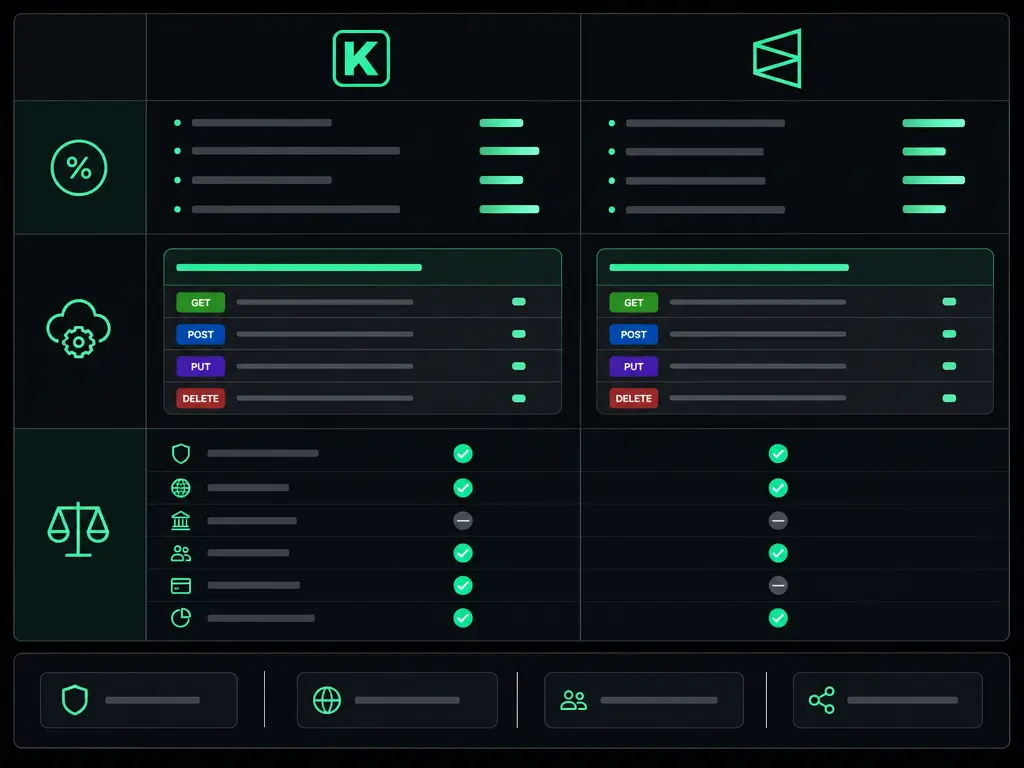
Every fee, every API endpoint, every resolution rule — on one page. Stop opening 8 tabs every time you trade. Print it, save it, never Google a platform detail again.
The Problem
You are about to place a trade. What are Polymarket's taker fees again? Does Kalshi charge for ACH withdrawals? Which API endpoint gets the order book? How do weather contracts resolve?
Every answer is a Google search away — and every search costs you seconds you do not have in a fast-moving market.
The Solution
This cheat sheet puts all the answers on one page. Platform comparison. Fee structures. API endpoints. Resolution criteria. Beginner pitfalls. Everything you need, zero scrolling.
Keep it open on your second monitor. Print it and pin it above your desk. Save it offline on your phone for trading on the go.
What's Inside
📋 Platform Comparison Table
Kalshi vs Polymarket side-by-side: regulation, access, market creation, settlement, platforms, liquidity, fees, KYC requirements, and which is best for your trading style.
💰 Fee Structures
Maker and taker fee formulas for both platforms, category rates on Polymarket, deposit and withdrawal costs. Updated October 2026.
🔗 API Endpoints Quick Reference
Kalshi REST v2 + WebSocket, Polymarket CLOB + GraphQL. Most-used endpoints with example cURL commands. Authentication methods for both platforms.
🌍 International Access
Which countries can use which platform. VPN considerations. Withdrawal methods by region. What non-US traders need to know.
📊 Resolution Criteria
How Kalshi weather contracts resolve (NOAA data). What sources Polymarket uses for political markets (Associated Press). Where to verify economic indicators (FRED, BLS).
⚠️ Top 5 Beginner Pitfalls
The most common mistakes new prediction market traders make — and exactly how to avoid them. Based on real trader data, not guesswork.
Kalshi Tips and Tricks for Beginners
There are no Kalshi cheats. What works is getting the basics right on every single trade. These seven rules are the short version of the cheat sheet, the PDF adds the tables and endpoints behind them.
Read the price as a probability
A YES contract pays $1.00 if the event happens. A price of 30 cents means the market puts the chance at about 30 percent. Only buy when your own estimate is clearly higher than the price, otherwise you have no edge.
Check the fee before you click
The taker fee is round up(0.07 x contracts x price x (1 - price)), capped at 1.75 cents per contract. It is highest around 50 cents: 100 contracts at 50 cents cost $1.75 in fees, 100 contracts at 10 cents cost $0.63. Run your order through the Kalshi payout calculator before you trade.
Use limit orders where makers pay less
Resting limit orders pay the maker schedule, which is lower or zero depending on the series. If you are not in a hurry, post a limit order instead of taking the ask.
Read the settlement rules and the source
Every market settles on a named source. Weather markets settle on the National Weather Service daily climate report for one specific station, not on your weather app. Most surprises on Kalshi come from rules nobody read. Our Kalshi weather guide shows how this works in practice.
Avoid wide spreads and thin order books
If the bid is 40 cents and the ask is 48 cents, buying at the ask puts you 8 cents behind the moment you enter. Check volume and spread first, and skip markets where you could not get out again at a fair price.
Size every position small
Even good trades lose often. A common rule is a fraction of the Kelly stake, for example a quarter. The Kelly calculator gives you the number from your bankroll, the price and your own probability.
Practice first, and remember you can sell early
You do not have to hold a contract until expiry: you can sell it back to the market at any time while it trades. Test your process with fake money in the Kalshi demo environment before you use real funds.
Want a strategy beyond the basics? Read our five data-driven Kalshi strategies. 18+. Prediction markets involve real financial risk. Availability depends on your country and US state.
"Traders who keep reference material at their fingertips execute faster and make fewer mistakes. This cheat sheet is the trading equivalent of a pilot's checklist — boring but essential."
— EdgeOutcome Team
Frequently Asked Questions
What is the Prediction Market Cheat Sheet?
A single-page PDF reference for Kalshi and Polymarket traders. It compares both platforms across every dimension that matters when you are trading: fees, API access, withdrawal methods, market types, and resolution rules.
What exactly is on the cheat sheet?
The sheet has 6 sections: (1) Comparison table, (2) Fee structures, (3) API endpoints, (4) International access guide, (5) Resolution criteria by market type, and (6) Beginner pitfalls. All on one page — designed for printing or second-screen reference.
Is this a physical product?
No — it is a digital PDF download. After you enter your email, the download link arrives in your inbox within a minute. Print it yourself or keep it on your devices.
How often is the cheat sheet updated?
We update it whenever Kalshi or Polymarket change their fees, API, or policies. Everyone on the list receives every update for free. The current version is October 2026.
What are the best Kalshi tips for beginners?
Read the price as a probability, check the fee before every order, read the settlement rules and source, avoid wide bid-ask spreads, size positions small, remember you can sell before expiry, and practice in the Kalshi demo environment with fake money first. Each tip is explained in the section above.
Are there Kalshi cheats or cheat codes?
No. Kalshi is a CFTC-regulated exchange and there are no cheats, hacks or cheat codes that guarantee wins. A Kalshi cheat sheet is a reference card: it puts fees, rules and API details on one page so you make fewer avoidable mistakes.
Do I need both platforms to use this?
No. The cheat sheet is useful even if you only trade on one platform — the API reference and fee section are valuable standalone. But it is most useful for traders active on both Kalshi and Polymarket.
Get Your Free Cheat Sheet
One page. Every answer. Keep it open while you trade — faster decisions, fewer mistakes. Free PDF download, sent instantly to your inbox.